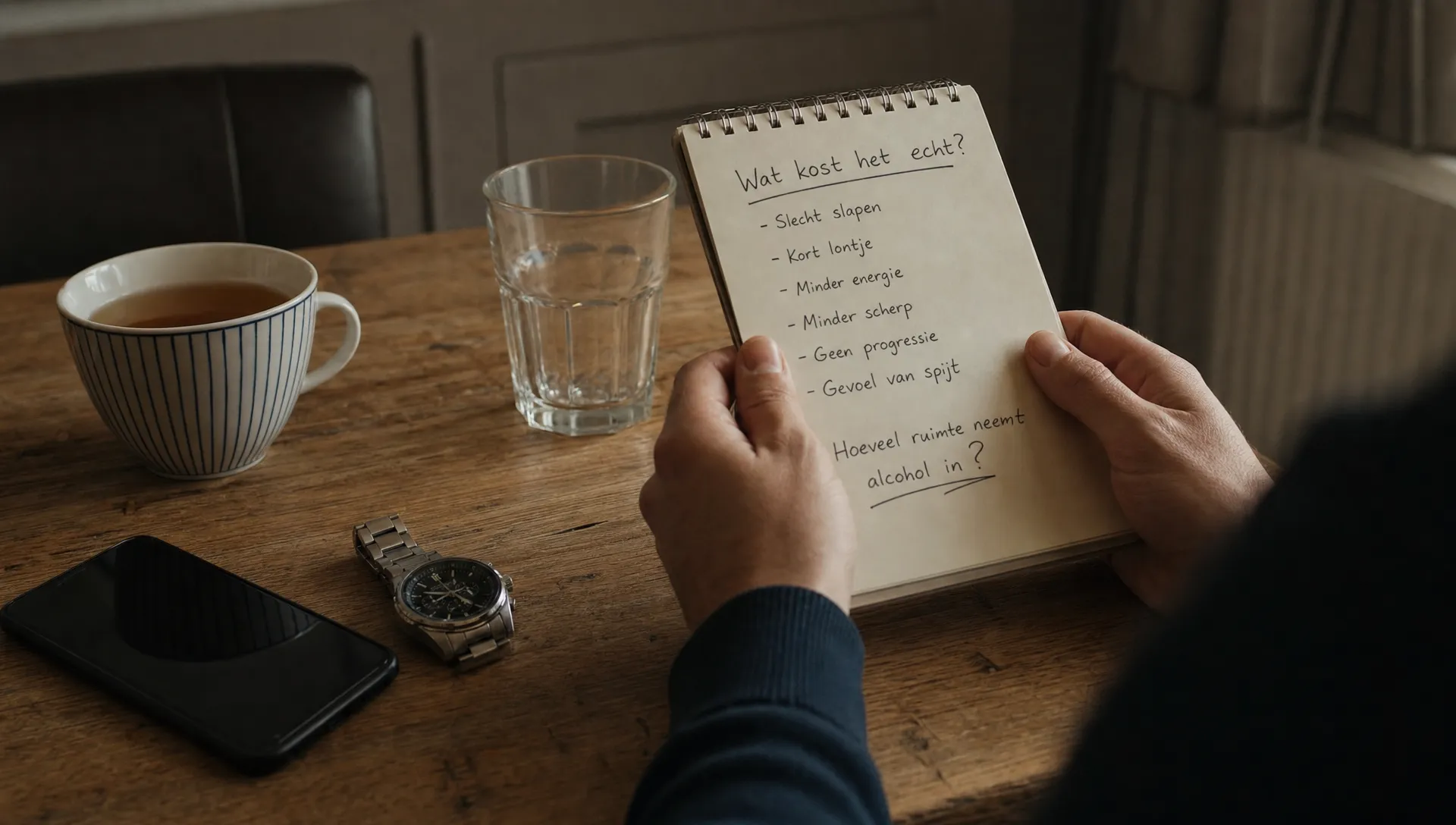
The question “When are you addicted to alcohol?” rarely comes up out of the blue. Often, doubts have been lingering for a while. You notice that you’re drinking more than you intended. A partner, friend, or coworker is concerned. Or you’re still able to function, but deep down you feel that alcohol is taking up more of your life than you’re willing to admit.
Alcohol addiction doesn’t always start in a way that’s obvious or dramatic. Many people continue to work, take care of their families, and maintain their social lives for a long time. That’s precisely why the problem can remain unclear. Addiction isn’t just about how much you drink, but mainly about the role alcohol plays in your life, how much control you still feel you have, and what happens when you try to cut back.
This article will help you recognize the signs, without passing judgment or applying labels. It is intended for people who are unsure themselves, as well as for loved ones, employers, and referral providers who want to support someone discreetly and thoughtfully.
When do we say someone has an alcohol addiction?
Just because you drink too much every now and then doesn’t automatically mean you’re an alcoholic. At the same time, you don’t have to be drunk every day to definitely have a problem with alcohol. The difference often lies in a loss of control, a strong urge to drink, and continuing to drink despite negative consequences.
In the international healthcare community, there is often discussion of an alcohol use disorder, a pattern in which alcohol use leads to clear problems or distress. The National Institute on Alcohol Abuse and Alcoholism describes signs such as drinking more frequently or in greater quantities than intended, an inability to cut back, spending a lot of time on alcohol, cravings, tolerance, and withdrawal symptoms.
In plain language, this means: alcohol is no longer something you choose freely, but something you have to take into account more and more. It affects your mood, behavior, health, relationships, or work. Sometimes subtly. Sometimes clearly.
Here is an important distinction:
| Situation | What you often see | Why It Deserves Attention |
|---|---|---|
| Social drinking | You drink occasionally, can easily skip a drink, and alcohol doesn't dictate your day | Usually, there is no loss of control |
| Risky Drinking | You regularly drink more than is sensible or use alcohol to relieve stress | The pattern may become more entrenched as stress or habit increases |
| Potential Addiction | You want to cut back but can't; you hide your drug use or continue drinking despite the harm it causes | Alcohol takes away control, space, and freedom |
If you want to gain a broader understanding of when behavior or substance use crosses the line into addiction, the article on when we can say someone has an addiction can help you recognize the underlying patterns.
Signs that alcohol is taking over more than you'd like
Alcohol addiction often develops gradually. As a result, it’s easy to explain away, downplay, or put off the warning signs. Still, there are recurring signs that you should take seriously.
You drink more often or in larger quantities than you had intended
You tell yourself you won't drink on weekdays, but you open a bottle anyway. You resolve to limit yourself to two glasses, but once again end up drinking much more. Maybe you manage to cut back for a few days, but then the old pattern returns.
Moments like these don't mean you're weak. They can, however, indicate a loss of control—especially if you notice that the commitments you make to yourself are becoming less and less reliable.
Alcohol becomes a way to relax, sleep, or feel
Many people drink not just for pleasure, but to numb something. Stress after work. Restlessness in your mind. A feeling of emptiness. Shame, sadness, tension, or memories you’d rather not feel.
Alcohol can temporarily numb your feelings, but it doesn’t address the underlying cause. Over time, it can actually lead to more anxiety, sadness, irritability, and sleep problems. This creates a vicious cycle: you drink to feel better, but then you need alcohol more and more often just to function normally.
You find yourself thinking a lot about your next drink
Another sign is mental preoccupation. You plan when you can drink. You check to see if there’s enough at home. You get irritated when plans interfere with your drinking time. Or you find yourself choosing social situations where alcohol is a given.
Addiction isn't just about the drinking itself, but also about the space alcohol takes up in your mind.
You hide, downplay, or negotiate
Maybe you only drink when no one is watching. You throw away bottles before anyone can notice them. You say it’s not that bad, even though you know you’re not telling the whole story. Or you compare yourself to someone who drinks “worse,” so you don’t have to examine your own drinking habits.
Hiding one's drinking often stems from shame or fear of judgment. Yet it is precisely this secrecy that signals that alcohol is taking over.
You keep drinking despite the consequences
Alcohol becomes a cause for concern when you continue to drink even though it’s clearly causing harm. Examples include arguments, trouble concentrating, missing appointments, fatigue, physical symptoms, panic, feelings of guilt, or poor performance at work.
Sometimes the consequences aren't yet visible to the outside world. You keep everything together on the surface, but you're paying a high price on the inside. That, too, is reason enough to consider seeking help.
How much do you have to drink to be considered an alcoholic?
There is no set amount at which you are officially “addicted.” The Dutch Health Council advises adults not to drink alcohol, or at least not more than one glass per day. That advice concerns health risks. Addiction, on the other hand, is about behavior, control, and dependence.
Someone who drinks every day may have a drinking problem without realizing it. Someone else might drink mainly in binges, but then completely lose control. Yet another person may not drink excessively, but emotionally can’t do without that one moment at the end of the day.
So the question isn't just, "How much do I drink?" Questions like the following are just as important:
- Can I stop my period without any trouble?
- Do I drink more often than I'd actually like to?
- Do I use alcohol to avoid feeling tension, emptiness, or pain?
- Do I get restless, irritable, or anxious when I can't drink?
- Do I hide my alcohol consumption or make it seem less than it actually is?
- Is alcohol taking a toll on my health, relationships, work, or self-esteem?
If you answer “yes” to several of these questions, that’s no reason to judge yourself. It is, however, a sign that you should take a more honest look at what’s going on.

Physical Signs and Withdrawal Symptoms
When your body becomes accustomed to alcohol, symptoms may arise as soon as you cut back or stop drinking. These can include tremors, sweating, poor sleep, nausea, heart palpitations, anxiety, irritability, or severe restlessness. In cases of long-term or heavy alcohol use, quitting without professional guidance can pose medical risks.
That’s why it’s wise not to just stop abruptly if you drink heavily or on a daily basis. Discuss this with a doctor or an addiction specialist. You can find more information about symptoms and safety in the article on alcohol withdrawal symptoms.
Tolerance is also an important sign. You need more alcohol to feel the same effect. What started as one or two drinks to unwind gradually increases. Not because you consciously planned it that way, but because your body and brain are adapting.
Why Alcohol Addiction Often Remains Hidden for a Long Time
When people think of alcohol addiction, many picture someone who has lost everything. That image is far from always accurate. An alcohol problem can coexist with a good job, a family, responsibilities, and a well-groomed appearance.
It is precisely people who face a lot of pressure, are in the public eye, or have a lot of responsibility who can keep going for a long time. They are used to being strong, solving problems on their own, and not showing vulnerability. Alcohol then becomes a quiet way to keep going. On the outside, they appear in control, but on the inside, their dependence grows.
Shame also plays a major role. Many people are afraid of being judged or of damaging their reputation. They fear that seeking help means they have failed. In reality, it takes courage to honestly admit that something is no longer working.
This can be confusing for loved ones. You may notice mood swings, withdrawal, secrecy, or fatigue, but the person denies there’s a problem. This doesn’t necessarily mean they’re consciously lying. Denial can also be a defense mechanism, because the truth feels too painful or threatening.
Alcohol, Stress, Trauma, Depression, and Burnout
Alcohol problems are rarely completely separate from the rest of a person’s life. Many people drink more during periods of stress, loss, trauma, loneliness, depression, or burnout. Alcohol can then feel like a quick fix: a momentary escape from thoughts, tension, and pain.
But when alcohol becomes the primary way of coping with emotions, recovery becomes more elusive. The underlying stress persists. Sleep becomes less restorative. Relationships come under strain. The sense of control diminishes.
That’s why effective treatment for alcohol addiction often goes beyond simply stopping drinking. It’s also about understanding why alcohol came to play such a role. What was it meant to numb? What had you been putting up with for too long? What patterns, pressures, or pain are keeping your drinking going?
A treatment that focuses solely on the condition sometimes fails to take into account the person behind the problem. Especially when trauma, depression, burnout, or chronic stress are also involved, a personalized and thoughtful approach is important.
What can you do if you recognize yourself in this description?
If you're unsure whether you have an alcohol addiction, you don't have to have all the answers right away. A first step is often to honestly and calmly examine what's happening—not to punish yourself, but to gain clarity.
For example, you could keep track for a few weeks of when you drink, how much you drink, and what leads up to it. Don’t just focus on the number of drinks, but also on your feelings, situations, and thoughts. Do you drink after stressful days at work? After conflicts? When you’re alone? When you feel empty?
In addition, talk to someone you trust. Choose someone who won’t judge you right away, but who can offer you honest guidance. If you find that you’re unable to quit or cut back, or if you experience withdrawal symptoms, seek professional help. You can do this through your primary care physician, an addiction treatment organization, or a confidential intake at a private treatment facility.
Important: If you are experiencing acute suicidal thoughts, confusion, severe withdrawal symptoms, or are in immediate danger, please contact the GP on-call service, dial 112, or reach out to a local crisis hotline. Private treatment is not a substitute for emergency care.
If you're worried about someone else
It can be difficult for partners, family members, friends, employers, and referral sources to bring up the topic of alcohol use. You want to help, but you don’t want to attack the other person or lose them. Still, staying silent can make the problem worse.
It’s best to choose a calm moment when the other person isn’t under the influence. Describe specifically what you observe, without making a diagnosis. For example: “I’ve noticed that you often drink after work and that you become quieter or more irritable afterward. I’m worried about you.” That’s often safer than saying, “You’re an alcoholic.”
You don't have to solve the problem. But you can offer support, set boundaries, and help them find the right kind of help. For more guidance, the article on how to help a loved one with an addiction is a good next step.
Employers and professionals must weigh their options with extra care. Privacy, trust, and safety are essential in such situations. An employee or client struggling with alcohol usually does not need to be pressured or made to feel ashamed, but rather needs clear, discreet, and appropriate support.
When is intensive support or a treatment facility appropriate?
Not everyone with an alcohol problem needs a residential program. Sometimes outpatient care, consultations with a primary care physician, or support close to home can help. However, more intensive treatment may be appropriate if the drinking pattern is persistent, previous attempts have not led to lasting improvement, or the person’s daily environment perpetuates the drinking.
A treatment setting can also be helpful when alcohol use is linked to trauma, burnout, depression, or chronic stress. In such cases, stepping back from triggers, responsibilities, and social pressures is sometimes necessary to truly examine what’s going on.
Signs that intensive support is worth considering:
- You've tried to cut back or quit several times, but you keep slipping back into your old habits.
- You drink in secret or feel ashamed of your drinking.
- You'll experience physical or psychological symptoms if you don't drink.
- Your work, relationship, or health will come under pressure.
- You need peace of mind, structure, and professional guidance to break out of this pattern.
- You want to seek help, but privacy and discretion are important to you.
At Montgó Lifestyle in Spain, the focus is on providing personalized, discreet care for people who are struggling with issues such as addiction, stress, trauma, depression, or burnout. The peaceful setting on the Costa Blanca offers a respite from the pressures of daily life, while the program remains focused on treatment, structure, guidance, and a return to a healthier lifestyle.
A private setting can be especially valuable if you need immediate access, confidentiality, intensive support, and an approach that isn’t confined to standard procedures. That doesn’t mean it’s the right choice for everyone. A confidential conversation can help you determine what’s best for your situation or for someone you’re concerned about.
Recognition is not a judgment, but a starting point
The question “When are you addicted to alcohol?” can feel confrontational. Still, asking that question is often a sign that there’s still a healthy part of you that wants to change. You don’t have to lose everything first before seeking help is justified. You also don’t have to know for sure what label applies.
If alcohol is taking up more of your life than is healthy, if you’re losing control, or if you find that you can no longer make free and honest choices, then that’s reason enough to seek help. Not out of shame, but out of concern for yourself and the people around you.
Frequently Asked Questions About Alcohol Addiction:
When are you addicted to alcohol? You may be addicted to alcohol if you lose control over your drinking, often drink more than you intend to, experience a strong urge to drink, and continue drinking despite negative consequences. It’s not just about the amount, but about the role alcohol plays in your life.
Are you addicted if you drink every day? Not everyone who drinks daily is automatically addicted, but drinking every day can be an important warning sign—especially if you find it hard to go a day without drinking, feel restless without alcohol, or drink to numb stress or emotions.
Can you be addicted to alcohol even if you’re still functioning well? Yes, it’s possible. Some people continue to work for a long time, take care of others, and keep their lives seemingly in order. Yet, in the meantime, alcohol can have a significant impact on their health, emotions, relationships, and sense of control.
Is it safe to stop drinking alcohol abruptly? That depends on how much you drink and for how long. With heavy or long-term alcohol use, withdrawal symptoms can be severe. Therefore, if your body may be dependent on alcohol, do not simply stop abruptly; instead, consult a doctor or an addiction specialist.
What if someone refuses help for alcohol use? Try to calmly describe what you’re seeing and what concerns you. Avoid making accusations and set boundaries when necessary. You can’t force someone to recover, but you can offer support and suggest appropriate help.
A Confidential First Step
If you recognize these signs in yourself, a loved one, an employee, or a client, a discreet conversation can provide peace of mind and clarity. At Montgó Lifestyle, we take a careful look at the person behind the alcohol use, the underlying causes, and what it takes to safely break away from old patterns.
You don’t need to be sure which treatment is right for you before you reach out. A confidential initial consultation can help clarify the situation and determine whether private care in Spain is a good next step.