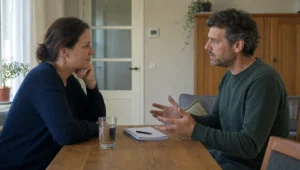
Burnout rarely results from just one busy month. It’s often the result of pushing through for a long time, constantly adapting, shouldering responsibility, and ignoring warning signs until the body and mind can no longer cope. Taking a break helps, but for many people, resting at home isn’t enough. The laptop is nearby, family members have expectations, work keeps pulling at you, and old patterns automatically resurface.
That’s why burnout recovery in Spain can be a suitable step for some people. Not because Spain itself is a cure, but because distance, privacy, and intensive support can combine to create a different kind of recovery environment—a place where you can temporarily step away from your usual surroundings, so that you not only have to stop working but can also understand why you kept going for so long.
The World Health Organization describes burnout as an occupational phenomenon resulting from chronic work-related stress that has not been properly managed. In practice, burnout often affects more than just work. It impacts your sleep, relationships, concentration, self-image, emotions, and sense of control. That is precisely why recovery often requires more than just a few weeks off.
Distancing oneself is not the same as running away
Many people feel hesitant about the idea of going abroad for recovery. They wonder if they shouldn’t just learn to cope with their situation at home. That hesitation is understandable. After all, recovery is ultimately about returning to real life, not about staying away from responsibilities forever.
Still, taking a temporary step back can actually help you look at that real life more objectively. At home, you’re often right in the middle of the systems that have contributed to your exhaustion. Think of work pressure, being constantly available, family roles, social expectations, the drive to perform, or the habit of always having to be strong. Even when you take time off, your nervous system can remain on high alert because everything around you still feels the same.
In that case, distance isn’t an escape, but a break from automatic patterns. It gives you space to slow down without constantly being pulled back into the dynamics you’re trying to break free from. In a carefully guided environment, you can explore what happened, what you need, and how you’ll return differently later on.
Why a peaceful environment in Spain can be helpful
A different environment can make a difference on multiple levels. The warm climate, the natural light, and the tranquil atmosphere of the Costa Blanca can all contribute to relaxation, but they are not the treatment itself. The value lies primarily in the combination of environment, structure, professional guidance, and discretion.
When you’re experiencing burnout, your ability to make decisions is often impaired. Simple questions can feel overwhelming. What should I eat? Should I rest or exercise? Should I call my employer? Should I visit my family or not? In an intensive program, that mental noise diminishes. A rhythm emerges in which recovery isn’t something you have to fit in on the side, but temporarily becomes your main priority.
For people in the public eye, entrepreneurs, those in public roles, or those in positions of responsibility, privacy can also be a major consideration. Not everyone wants to admit in their hometown that they can’t go on like this. A private setting in Spain can make it easier to open up, without fear of social or professional exposure.
That doesn’t mean that recovery is intended only for certain groups. Burnout can affect anyone. What’s important is that the type of care provided is appropriate for the severity of the condition, the individual’s personal situation, and their need for rest, safety, and support.
When is burnout recovery in Spain truly effective?
A stay in Spain is particularly beneficial when your usual environment continues to hinder your recovery. This can be due to external pressure, but also to internal patterns such as perfectionism, a need for control, a desire to please others, or the feeling that you’re not allowed to rest until everything is finished.
| Situation | Why Distance Can Help | What to Look Out For |
|---|---|---|
| You'll still be working from home or available, right? | Physical distancing makes it easier to effectively enforce borders on a temporary basis | Make arrangements in advance regarding contact with work and responsibilities |
| You feel constantly tense at home | A change of scenery can help the body step away from its daily state of alertness | Rest works better with guidance, not just isolation |
| Previous assistance felt too fragmented | A residential program can offer more continuity and depth | Be sure to ask how the intake, counseling, and follow-up care are organized |
| You don't want everyone around you to know everything | Private healthcare abroad can offer greater discretion | Discuss confidentiality and communication clearly in advance |
| Burnout is also linked to trauma, depression, stress, or addiction | Intensive counseling can help explore the connections between symptoms | Do not choose a general wellness setting if there are complex symptoms involved |
| Your partner, family, or employer realizes that things aren't working out anymore | Distance can create a clear break during which recovery takes priority | Involve loved ones or work alone in a way that feels safe and appropriate |
Sometimes it’s hard to tell whether your symptoms are still just a result of being overworked or whether you’re experiencing a deeper form of exhaustion. In that case, it can help to first calmly compare the signs of burnout with your own situation. Not to label yourself, but to better understand why pushing through might no longer be working.

A burnout retreat in Spain or intensive treatment?
People looking for a burnout retreat in Spain often long for peace, quiet, and a safe place. That desire is perfectly understandable. Still, there is an important difference between a wellness retreat and a treatment setting for burnout recovery.
A retreat can offer relaxation. You can take a break from the pressure, perhaps sleep better, and temporarily feel more at ease. But when your burnout is linked to long-term stress, trauma, symptoms of depression, addiction, anxiety, or deep emotional exhaustion, relaxation alone is usually not enough. In those cases, professional guidance is needed to understand what lies beneath the symptoms.
A carefully designed recovery program looks not only at fatigue, but also at how you’ve coped with stress over the years. Why did you find it difficult to set boundaries? What responsibilities did you always feel you had? What happened when you took time to rest? What beliefs kept you going, but at the same time drained you?
At Montgó Lifestyle, the focus is on private treatment in a peaceful setting in Spain, with personalized attention, confidentiality, and guidance tailored to the individual behind the symptoms. The stay is therefore not a vacation package, but a temporary setting where recovery, structure, and professional support take center stage.
What Distance Can Reveal
At home, you’re often so used to your role that you no longer realize how much energy it takes. You’re a parent, a partner, a manager, an entrepreneur, a caregiver, a problem-solver, or the one who takes care of everything. Even while on sick leave, that identity can keep running on autopilot.
Distance can reveal the roles you continue to assume automatically. You may find that you have a hard time accepting help. Or that you feel guilty as soon as you’re not doing anything. Perhaps you’ll discover that your fatigue isn’t just physical, but also emotional. Insights like these require peace and quiet, but also safe guidance. Without guidance, distance can sometimes feel empty or confrontational.
That is why the quality of the environment is important. A good setting offers not only quiet, but also structure. Not only comfort, but also clear guidance. Not only privacy, but also the presence of professionals when things get difficult.
If you want to understand how a treatment program outside your home country compares to treatment in your own country, this article on therapy abroad as a suitable option can provide additional context.
When is Spain not the right first step?
Private treatment in Spain can offer a lot of flexibility, but it isn’t always the right first step. In the event of an acute crisis, immediate danger to yourself or others, severe distress, or a medical emergency, seeking local emergency care or contacting a primary care physician, crisis service, or emergency number is more important than traveling.
It’s also possible that someone isn’t yet ready for a residential program. Sometimes a motivational interview, family consultation, or practical preparation is needed first. In cases of burnout, it doesn’t help to push someone. Pressure has often been a contributing factor to the person getting stuck. An initial confidential conversation can then help determine what’s appropriate, without having to make a final decision right away.
This is important for loved ones and employers. You may see that someone is struggling but still not know how to help. Support often starts with acknowledgment, reassurance, and discussing options—not with monitoring, persuading, or forcing.
What a well-designed program should offer
If you're considering a burnout recovery program in Spain, look beyond just the location. The surroundings may be beautiful and peaceful, but the quality of the support provided determines whether your stay will truly be beneficial.
A well-designed program usually includes a number of key elements:
- A personal intake session in which symptoms, background, goals, and risks are discussed in detail.
- A treatment plan that isn't one-size-fits-all, but is tailored to your story and your capacity.
- Professional guidance that is available even outside of scheduled appointments.
- A clear daily structure that allows for rest, reflection, physical activity, and personal guidance.
- Focus on returning home, work, relationships, and daily responsibilities.
- Follow-up care or follow-up appointments to help prevent a relapse into old patterns.
When it comes to burnout, recovery isn’t just about doing less. It’s also about learning to feel, make choices, set boundaries, and live differently. That takes time. How long burnout lasts varies from person to person and depends, among other things, on the severity of the symptoms, the causes, the support you have, and the space you have to truly recover. You can read more about this in the article “How Long Does Burnout Last?”
The Role of Privacy and Discretion
Shame is a silent factor in burnout. Many people who hit a wall have, in fact, functioned well for a long time. They are used to staying in control, finding solutions, and not burdening others. Admitting that they can’t go on anymore can feel like a failure, even though it’s often a sign that the system has been overloaded for too long.
Discretion can be essential in such cases. Not because burnout is something to be ashamed of, but because a sense of security is necessary to be able to be honest. In a private setting, you can speak without constantly worrying about who might find out, what it means for your position, or how those around you will react.
This can be especially important for entrepreneurs, executives, healthcare professionals, managers, and people with a visible social network. But even for someone who doesn’t hold a public office, privacy can provide the space to finally stop having to pretend.
Returning Home: The True Benchmark
Treatment in Spain is temporary. The goal is not to avoid your everyday life, but to return to it in a different way. That’s why the transition back home deserves a lot of attention. Old patterns often await you in the same place: the same inbox, the same expectations, the same family or work dynamics.
Good aftercare helps people translate new insights into everyday behavior. This includes setting and maintaining boundaries, gradually returning to work, recognizing warning signs, planning time to rest, and organizing support. Sometimes this also means having difficult conversations with your employer, partner, or family. Not everything has to change right away, but without a follow-up plan, there’s a greater chance that someone will slip back into old coping mechanisms.
This is also relevant for employers and referring professionals. An employee or client doesn’t simply return “recharged.” Sustainable recovery requires realistic expectations, clear agreements, and attention to what a person needs to remain stable.
Frequently Asked Questions About Burnout Recovery in Spain:
Is burnout recovery in Spain suitable for everyone? No, not for everyone. It may be appropriate when distance, privacy, and intensive support are needed, but in the event of an acute crisis or medical emergency, local emergency care is more important. An intake assessment helps determine what is safe and appropriate.
Is a burnout retreat in Spain the same as treatment? Not always. A retreat often focuses on rest and relaxation, while treatment also addresses underlying patterns, sources of stress, emotions, behavior, and the transition back to daily life. Professional guidance is important for severe or long-term symptoms.
Do I need to completely cut off contact with work during my stay? That depends on your situation. For many people, taking a clear break from work helps, but sometimes limited contact is necessary. The important thing is that contact doesn’t create the same kind of pressure that hinders recovery.
How do I know if my symptoms are serious enough? If you’ve been feeling exhausted for a long time, aren’t recovering from rest, feel emotionally flat or irritable, have trouble sleeping, or can no longer function normally, it’s wise to seek help. You don’t have to wait until everything falls apart before asking for support.
What happens after returning from Spain? Aftercare is important to help you make a smooth transition back home. It involves retaining new insights, recognizing signs of a relapse, and making realistic arrangements with your work, family, and yourself.
A Confidential First Step
If you feel like you can no longer recover at home, it might help to take some time to calmly figure out what you need. That doesn’t have to be a big decision right away. Sometimes recovery starts with a single honest conversation where you don’t have to perform, explain yourself, or stay strong.
Montgó Lifestyle offers private treatment in Spain for people struggling with burnout, stress, trauma, depression, or addiction. In a peaceful setting on the Costa Blanca, the focus is on personalized care, discretion, and a lasting return to balance.
Would you like to explore whether this type of care is a good fit for yourself, a loved one, an employee, or a client? You can contact us confidentially through Montgó Lifestyle, and together we can determine which step feels safe and feasible.