Going to rehab abroad can feel like a big step. For some people, that’s exactly why it works: it literally creates distance between you and the environment where substance use, stress, shame, or old patterns are constantly being triggered. For others, treatment closer to home is more appropriate. So the question isn’t whether going to rehab abroad is always better, but for whom it might be helpful.
People who search for “rehab abroad” are usually looking for more than just a different location. Often, they’re seeking peace and quiet, privacy, direct support, and a place where they don’t have to constantly battle the same triggers. Maybe you’ve already tried to cut back, gone to therapy, or made commitments to yourself. Perhaps a partner, family member, employer, or referral professional is involved because the situation at home or at work no longer feels sustainable.
In this article, you'll learn when undergoing rehab abroad might be appropriate, when caution is needed, and what questions you should ask before making a decision.
What does it actually mean to go to rehab abroad?
Rehabilitation abroad means temporarily stepping away from your normal living environment to receive intensive support in a different setting for addiction and the underlying patterns associated with it. This can involve alcohol, drugs, medication, or behavioral addictions. Often, other issues are also involved, such as burnout, trauma, feelings of depression, stress, anxiety, or emotional exhaustion.
Effective treatment isn't just about quitting. Withdrawal can be an important part of the process, but recovery usually also requires insight, structure, guidance, processing, and a plan for the future. Otherwise, there's a risk that once you return to the same circumstances, you'll end up looking for the same solutions all over again.
Going abroad is neither a magic solution nor an escape. The value lies in the combination of distance, safety, professional guidance, and an environment where you temporarily don’t have to take on as many roles. For a while, you’re not the entrepreneur, parent, partner, colleague, or the person who has to keep everything under control. This creates space to take a more honest look at what’s going on.
Who can benefit from undergoing rehab abroad?
If there are too many triggers at home
For many people, their immediate environment is closely linked to substance use. Think of friends with whom you drink or use drugs, work stress that keeps leading to relapses, tension at home, loneliness in the evenings, or places where you almost automatically fall back into old patterns of behavior.
Distance can bring peace of mind. Not because problems disappear the moment you step onto a plane, but because it takes you out of your daily routine. You don't have to expend as much energy avoiding temptation, and you have more space to understand why the pattern is so persistent.
A temporary residential setting can be especially helpful in cases of repeated relapse. The day has structure, support is available, and you don’t have to constantly decide on your own what’s best. That can be important when your willpower has been depleted for a long time.
When privacy and discretion are of the utmost importance
Shame and fear of judgment prevent many people from seeking help. This is certainly true for people in the public eye, entrepreneurs, professionals, and people from small communities or families where addiction is a difficult topic to discuss.
Treatment abroad can offer greater anonymity. You’re less likely to run into people you know, and you can temporarily step away from social or professional expectations. That makes it easier for some people to be open about alcohol, drugs, medication, loss of control, trauma, or emotional pain.
Privacy doesn't mean you have to hide. It means you decide for yourself who is involved, what is shared, and when. In private healthcare, that discretion should be taken seriously from the very first contact.
If previous assistance has not been sufficient
Sometimes a person has already undergone outpatient therapy, spoken with a primary care physician or psychologist, or tried to quit on their own. Those efforts may have been valuable, but they may still not have been enough to break the pattern.
Rehabilitation abroad may be appropriate when the care needs to be more intensive, more personalized, and less fragmented. Instead of a single session per week, it offers an environment where multiple elements come together: therapy, rest, daily structure, personal guidance, reflection, lifestyle, and preparation for returning home.
It’s important not to focus on failure. Just because previous treatment didn’t work well enough doesn’t mean recovery is impossible. It may simply mean that the approach wasn’t well-suited to the complexity of your situation.
When Addiction Coexists with Burnout, Trauma, or Depression
Addiction is rarely completely separate from the rest of a person’s life. Alcohol may have become a way to cope with stress. Drugs can provide temporary energy, numbness, or a sense of control. Medication can offer a lifeline when anxiety, insomnia, or emotional pain becomes too much to bear.
When trauma, burnout, depression, OCD, or chronic stress are also involved, a broad perspective is needed. Focusing solely on the substance may be too narrow an approach. The underlying tension, emptiness, guilt, perfectionism, or survival mode will then persist.
Appropriate treatment, therefore, focuses on the person behind the addiction. What has helped you keep going? What has become too much? Which patterns were once functional but are now working against you? It is precisely in a calm setting that these questions can feel less intimidating.
When is undergoing rehabilitation abroad less appropriate?
Seeking treatment abroad is not the right first step for everyone. Sometimes, medical stabilization, crisis care, or local support is needed first. In cases of acute suicidal ideation, psychosis, severe confusion, or immediate danger to yourself or others, treatment abroad is not intended as a substitute for emergency care. In such cases, contact local emergency services, your primary care physician, or a crisis hotline immediately.
Even in cases of severe physical dependence—for example, on alcohol, benzodiazepines, or certain other substances—a medical evaluation is necessary before you stop using them. Stopping suddenly can pose risks. A responsible treatment plan will therefore always begin by carefully assessing safety, substance use, medication, physical health, and psychological resilience.
Motivation is also important. You don’t have to be certain that everything will work out, and it’s normal to have doubts. But if someone goes through with it only because others demand it and feels no willingness whatsoever to examine the pattern, the process is more likely to stall. A confidential intake session can help explore this honestly, without pressure.
| Situation | Rehabilitation abroad may be appropriate if | First, something else might be needed if |
|---|---|---|
| Recurring relapse | There are many triggers at home, and previous attempts weren't enough | There is an acute crisis or medical instability |
| Need for privacy | Discretion is important because of work, family, or reputation | There is still a lack of transparency toward a physician or practitioner directly involved in cases involving safety risks |
| Combination of symptoms | Addiction is often associated with stress, trauma, burnout, or symptoms of depression | Specialized emergency care or diagnostic testing is required first |
| Motivation | You have your doubts, but you're willing to take an honest look | You do it just to please someone else |
| Return Home | Attention is given to aftercare and relapse prevention | There is no plan for the area after treatment |
Why Distance Sometimes Does More Than Rest Alone
When people think of treatment in Spain or another country, many first think of sunshine, nature, and comfort. While these elements can be supportive, they are not the core of the experience. The core is that being away from home can temporarily take the nervous system, thoughts, and behavior out of their normal survival mode.
At home, you often have to keep functioning. You respond to messages, take care of work, look after others, and keep up appearances. Even when you’re officially taking a break, your responsibilities are always close at hand. In a residential treatment setting, that pressure eases. There’s room to sleep, eat, talk, feel, and rebuild a sense of structure.
Distance also reveals what normally remains hidden. For example, you notice how often you resort to controlling behavior, how difficult silence feels, or how quickly guilt sets in when you’re not available to others. These aren’t just minor details. They’re often precisely the patterns that stand in the way of recovery.
What sets a well-planned process apart?
Making the right choice doesn’t start with the location, but with whether the treatment fits your situation. Undergoing rehab abroad requires trust. You need to know who will be guiding you, how the intake process works, what happens during difficult moments, and how the transition back home is prepared.
Pay particular attention to the following points: a thorough intake assessment, a focus on physical and psychological safety, a personalized treatment plan, adequate professional staff, clear agreements regarding privacy, and a realistic explanation of what treatment can and cannot offer. If you’re comparing multiple options, this article on how to choose a rehab center abroad can help you ask more targeted questions.
A well-structured treatment program also recognizes that detox or stopping substance use is not the same as sustainable recovery. Without attention to relapse prevention, emotions, relationships, work stress, and lifestyle, the return home can be precarious. Aftercare should therefore not be an afterthought, but an integral part of the recovery plan.
How Montgó Lifestyle Approaches This Step
Montgó Lifestyle offers private care in Spain for people who are struggling with addiction, burnout, trauma, stress, depression, or other psychological challenges. The treatment setting in the peaceful hills of the Costa Blanca is designed to provide privacy, comfort, structure, and personalized attention. It is not a vacation, but a safe haven where, with professional guidance, you can find a moment of calm and rediscover your direction.
The approach is personalized. We look at your story, what you’ve tried before, where you’re getting stuck, and what’s needed not only to stop using temporarily, but also to learn to cope differently with anxiety, pain, or a loss of control. During your stay, professional support is available 24/7, and where appropriate, we provide aftercare to support your transition back home.
For people specifically looking for treatment in Spain, it may be helpful to first read about when a rehab facility in Spain might be appropriate. This will make it clearer whether the location, the level of support, and the need for distance align with their current situation.

Practical concerns: work, family, expenses, and returning home
It’s normal to have doubts. Many people wonder if they can actually take time off from work or family. Others worry about costs, confidentiality, or how to explain their absence. Sometimes the biggest hurdle isn’t the treatment itself, but all the arrangements that need to be made around it.
Private care should allow for the opportunity to discuss these questions at length. What practical preparations need to be made? Who needs to know what, and who doesn’t? Can a partner, family member, employer, or referring physician be involved? How is privacy protected? What happens if the situation turns out to be more serious than expected during the stay?
The return home also deserves attention. Recovery is stronger when the home situation does not remain exactly the same. This may involve agreements about workload, boundaries in relationships, times for support, therapy after returning home, or a different daily routine. Sometimes, small adjustments at home can also help promote relaxation, such as fewer distractions in the evening, a consistent bedtime routine, and warm, dimmable lighting. Those who want to design their living environment more thoughtfully can find inspiration in modern lighting for peaceful living spaces.
Cost is also a real factor. Private treatment is an investment and is often not covered by standard insurance plans. That can be a significant consideration. At the same time, private care offers more room for discretion, intensity, personal attention, and sometimes faster clarity. It’s wise to discuss this openly in a confidential conversation, without feeling pressured to make a decision right away.
For family members, employers, and referring professionals
It’s not just the person struggling who is looking for answers. Partners, parents, adult children, friends, employers, and professionals are sometimes the first to notice that something is wrong. They observe avoidance, mood swings, relapses, exhaustion, or a loss of control, but don’t know how to help without putting pressure on the person or making the situation worse.
Seeking treatment abroad may sound promising to loved ones, but it’s still important that the person doesn’t feel overwhelmed. An initial conversation can also serve to understand what options are available, which signs should be taken seriously, and how to discuss the topic sensitively. Employers can, while respecting privacy and with the person’s consent, help find solutions regarding time off, recovery, and a safe return to work.
For referring professionals, the content of the treatment is particularly important. Is the intensity appropriate for the issue at hand? Is attention given to comorbid conditions, such as trauma, depression, or burnout? Is follow-up care discussed? Is there a clear point of contact for handover when necessary and permitted? Questions like these help ensure a safe decision.
How do you know if this is the right time?
There’s rarely a perfect moment to seek help. Many people wait until they really can’t go on anymore, because they think they need to be absolutely sure they’re ready first. In reality, change often begins with doubt. Part of you wants to stop, while another part is afraid of what might surface if you do.
A good time to seek help might be when you notice that the commitments you’ve made to yourself are becoming less and less effective, that your substance use or compulsive behavior is affecting your health, relationships, or work, or that you’re becoming increasingly emotionally disconnected from yourself. Intensive treatment may also be appropriate if you’re functioning on the outside but feel exhausted on the inside.
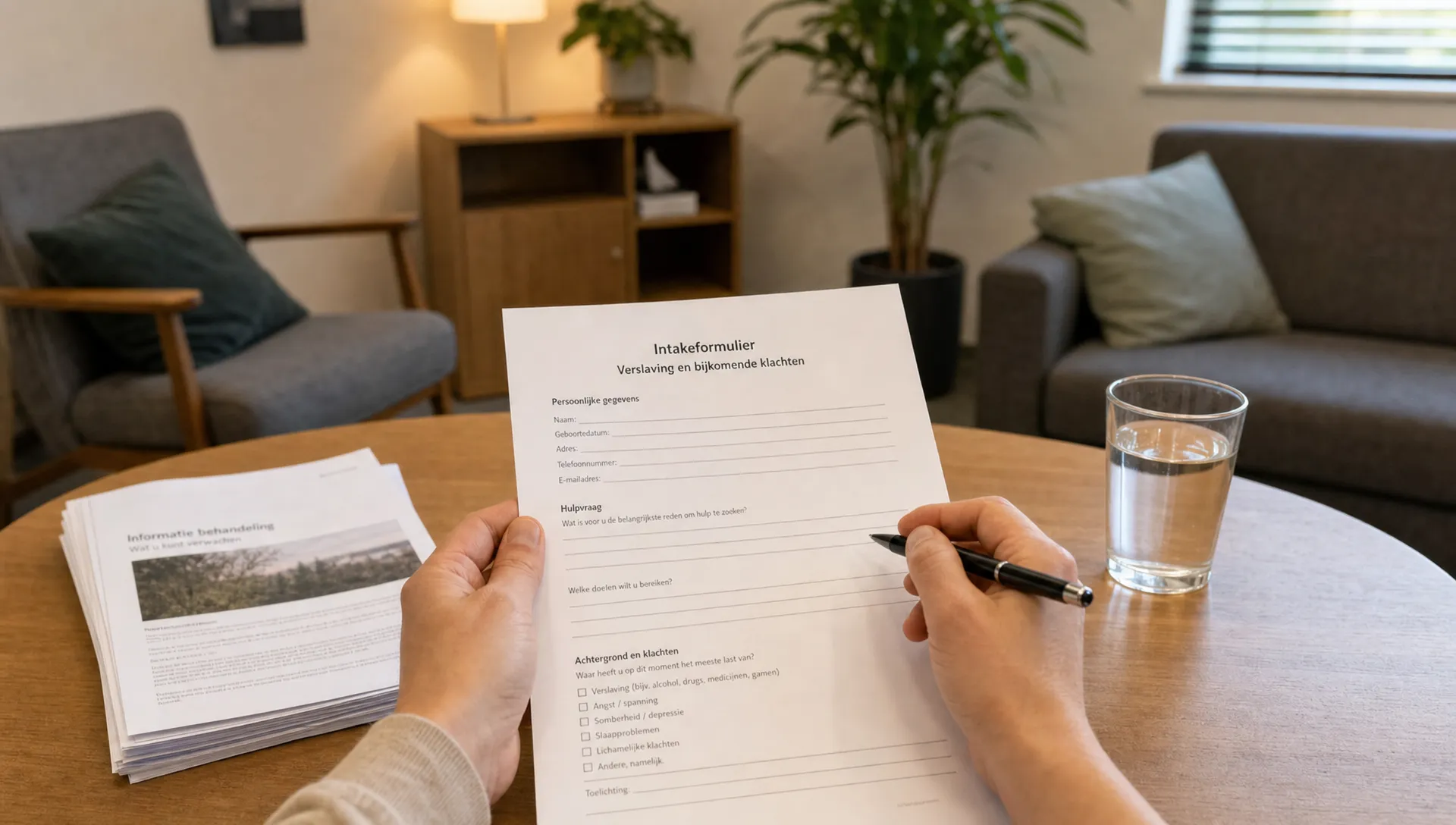
The first step doesn’t have to be admission right away. A confidential intake session can help determine what’s going on, what kind of help is appropriate, and whether treatment abroad is a good fit for your situation. Sometimes this confirms that residential care is the right choice. Other times, a different approach turns out to be better. Quality care can support both outcomes.
Frequently Asked Questions About Rehab Abroad:
Is rehab abroad better than treatment in the Netherlands? Not necessarily. It can be helpful when distance, privacy, and intensive support are needed. For some people, getting help close to home is more appropriate, especially if there are acute medical or psychological risks involved.
Do I have to be absolutely sure I want to quit before I reach out? No. Doubt is often part of addiction and major life decisions. A confidential conversation can actually help you gain clarity about your situation and explore what kind of support would be appropriate.
Can undergoing treatment abroad also help with alcohol addiction? It can, but safety comes first. In cases of long-term or heavy alcohol use, a medical evaluation is important before you stop drinking. Do not stop suddenly without professional guidance if there is a risk of severe withdrawal symptoms.
What if, in addition to addiction, I’m also experiencing burnout, trauma, or symptoms of depression? In that case, it’s especially important for the treatment to take a broader view than just the substance or behavior. A personalized treatment plan can address stress, emotions, patterns, lifestyle, and the transition back home.
Can my family or employer contact you? Yes, a family member, employer, or referring professional can often request an initial consultation. Privacy remains a priority in this process. Specific information is shared only with the consent of the person concerned.
What happens after you return home? A carefully planned process addresses aftercare, relapse prevention, and practical arrangements for home or work. The transition back to daily life is an important part of recovery.
A Confidential First Step
If you're thinking about going to rehab abroad, you don't have to have all the answers right away. It's enough to honestly acknowledge that continuing the way things are isn't working anymore. From there, you can take your time figuring out what kind of help is right for you.
At Montgó Lifestyle, you can discuss what’s on your mind in a trusting environment—whether it’s about yourself, a loved one, an employee, or someone you’re mentoring professionally. Together, we’ll determine whether private treatment in Spain is appropriate and responsible, with a focus on privacy, personalized support, and the transition back to daily life.